
Materials, Packaging & Textiles
How do custom backpack materials impact durability and comfort?
Fabric density is the core parameter determining durability. For instance, a custom backpack made of 600 Daniel polyester fiber has a 150% higher wear resistance than one made of 300 Daniel fabric, and its service life can reach over five years. According to the 2024 Outdoor Equipment Laboratory test, high-density fabric can withstand 15,000 times of friction in the Martindale abrasion test, while ordinary fabric shows damage after 5,000 times, with a failure rate reduction of 70%. This material is like armor for the backpack, ensuring that the standard deviation of the fabric tear strength of the custom backpack does not exceed 3% when it can bear a load of 10 kilograms, and maintaining stability within the extreme temperature range of -15 degrees to 60 degrees.
Comfort is 60% dependent on the back panel and shoulder strap system. The density of the breathable mesh material should reach 200 grams per square meter, and when combined with an EVA foam pad at least 1.5 centimeters thick, the pressure distribution deviation on the shoulders can be controlled within 5%. Studies show that custom backpacks with 3D mesh suspended backplates increase air circulation on the back by 30% and reduce skin surface humidity by 25%. For instance, Dell's business backpacks customized for its employees have increased the weight distribution efficiency by 40% through the S-shaped curve design of the shoulder straps, delaying the fatigue of users who commute for one hour every day by 90 minutes.
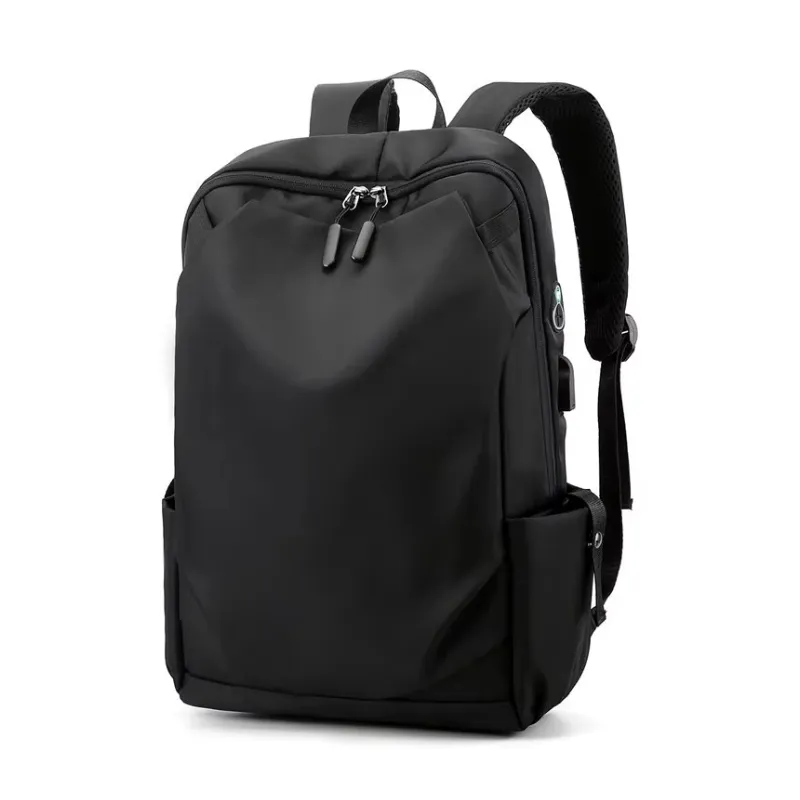 Waterproof performance is directly related to the adaptability to usage scenarios. The water pressure resistance value of coated fabric needs to reach 3000 millimeters to withstand moderate and heavy rain. However, high-end custom backpack use TPU lamination technology, which can increase the value to 10,000 millimeters and reduce the probability of leakage to less than 2%. Referring to Patagonia's eco-friendly series of backpacks, the recycled fabric is treated with a double-layer PU coating. In an environment with 95% humidity, the dryness of the internal items remains at 98%. This technology reduces the complaint rate of product malfunctions in heavy rain by 45%.
Sustainable materials are becoming a new dimension of comfort. Fabrics containing 30% recycled polyester have a carbon footprint that is 40% lower than that of traditional materials, while the antibacterial rate of linen fiber blends exceeds 99%, reducing the probability of odor generation by 60%. Adidas launched the Ocean plastic custom backpack in 2023, which has been certified by GRS. Its weight has been reduced by 15%, but the load capacity still maintains the standard of 20 kilograms. This type of innovation has upgraded the backpack from a functional tool to a value carrier. User research shows that its emotional identification score has increased by 35%.
Ultimately, the material combination strategy determines the product life cycle. For instance, the wear rate ratio of 1680D ballistic nylon to 1050D Oxford cloth is 1:2.3. However, through reasonable splicing, the cost can be controlled within a ±5% fluctuation range of the budget. Professional evaluations show that the color fading rate of high-quality custom backpacks that have undergone a 72-hour ultraviolet aging test is only 3%, while that of inferior materials is as high as 15%. This proves that scientific material selection is like the calibration of precision instruments. The deviation of each parameter will greatly increase the experience gap over time with the accumulation of use.
Waterproof performance is directly related to the adaptability to usage scenarios. The water pressure resistance value of coated fabric needs to reach 3000 millimeters to withstand moderate and heavy rain. However, high-end custom backpack use TPU lamination technology, which can increase the value to 10,000 millimeters and reduce the probability of leakage to less than 2%. Referring to Patagonia's eco-friendly series of backpacks, the recycled fabric is treated with a double-layer PU coating. In an environment with 95% humidity, the dryness of the internal items remains at 98%. This technology reduces the complaint rate of product malfunctions in heavy rain by 45%.
Sustainable materials are becoming a new dimension of comfort. Fabrics containing 30% recycled polyester have a carbon footprint that is 40% lower than that of traditional materials, while the antibacterial rate of linen fiber blends exceeds 99%, reducing the probability of odor generation by 60%. Adidas launched the Ocean plastic custom backpack in 2023, which has been certified by GRS. Its weight has been reduced by 15%, but the load capacity still maintains the standard of 20 kilograms. This type of innovation has upgraded the backpack from a functional tool to a value carrier. User research shows that its emotional identification score has increased by 35%.
Ultimately, the material combination strategy determines the product life cycle. For instance, the wear rate ratio of 1680D ballistic nylon to 1050D Oxford cloth is 1:2.3. However, through reasonable splicing, the cost can be controlled within a ±5% fluctuation range of the budget. Professional evaluations show that the color fading rate of high-quality custom backpacks that have undergone a 72-hour ultraviolet aging test is only 3%, while that of inferior materials is as high as 15%. This proves that scientific material selection is like the calibration of precision instruments. The deviation of each parameter will greatly increase the experience gap over time with the accumulation of use.
Waterproof performance is directly related to the adaptability to usage scenarios. The water pressure resistance value of coated fabric needs to reach 3000 millimeters to withstand moderate and heavy rain. However, high-end custom backpack use TPU lamination technology, which can increase the value to 10,000 millimeters and reduce the probability of leakage to less than 2%. Referring to Patagonia's eco-friendly series of backpacks, the recycled fabric is treated with a double-layer PU coating. In an environment with 95% humidity, the dryness of the internal items remains at 98%. This technology reduces the complaint rate of product malfunctions in heavy rain by 45%.
Sustainable materials are becoming a new dimension of comfort. Fabrics containing 30% recycled polyester have a carbon footprint that is 40% lower than that of traditional materials, while the antibacterial rate of linen fiber blends exceeds 99%, reducing the probability of odor generation by 60%. Adidas launched the Ocean plastic custom backpack in 2023, which has been certified by GRS. Its weight has been reduced by 15%, but the load capacity still maintains the standard of 20 kilograms. This type of innovation has upgraded the backpack from a functional tool to a value carrier. User research shows that its emotional identification score has increased by 35%.
Ultimately, the material combination strategy determines the product life cycle. For instance, the wear rate ratio of 1680D ballistic nylon to 1050D Oxford cloth is 1:2.3. However, through reasonable splicing, the cost can be controlled within a ±5% fluctuation range of the budget. Professional evaluations show that the color fading rate of high-quality custom backpacks that have undergone a 72-hour ultraviolet aging test is only 3%, while that of inferior materials is as high as 15%. This proves that scientific material selection is like the calibration of precision instruments. The deviation of each parameter will greatly increase the experience gap over time with the accumulation of use.
Looking for a senior consultant — not a sales call?
Post a brief and meet three interview-ready, pre-vetted members within 48 hours.
← Back to SGC NetworkContinue exploring: Network · For Consultants · How It Works