
Materials, Packaging & Textiles
How can custom wine bottle boxes enhance your winery’s product presentation?
In the high-end wine market, product presentation is a key factor in determining consumers' first impression, and the average return on investment for custom wine bottle boxes in this aspect can reach 150%. According to a 2023 survey by the Wine Marketing Association, wineries that use custom packaging have a 40% increase in the retail appeal of their products, with consumers' dwell time rising by 25 seconds, directly boosting the purchase probability by 18%. For instance, after Silver Oak Winery in California, USA, introduced custom wooden boxes with magnetic opening and closing structures, the sales volume of its product line priced above $200 increased by 22% quarter-on-quarter. This confirms the direct impact of packaging on the premium capacity. The material thickness of these custom boxes is usually controlled between 2.5 and 4 millimeters, with a compressive strength exceeding 50 kilograms, ensuring that the transportation damage rate is less than 0.5%.
From the perspective of sensory experience, custom boxes activate consumers' emotional resonance through the synergistic effect of touch and vision. Research shows that packaging boxes with gilding technology can enhance brand memory by 35%, and when the density of the internal EVA foam lining reaches 60 kilograms per cubic meter, it can provide the best cushioning protection and a sense of ceremony when opening the box. Take Durouin, a renowned chateau in Burgundy, France, as an example. Its 2022 vintage wine is paired with custom boxes made of FSC-certified paper, with a weight precise to 500 grams. This not only ensures structural integrity but also embodies environmental protection concepts, driving the series to a 30% premium in the Asian market. Data shows that such designs have increased the spontaneous sharing rate on social media by 45% and raised brand search traffic by 60%.
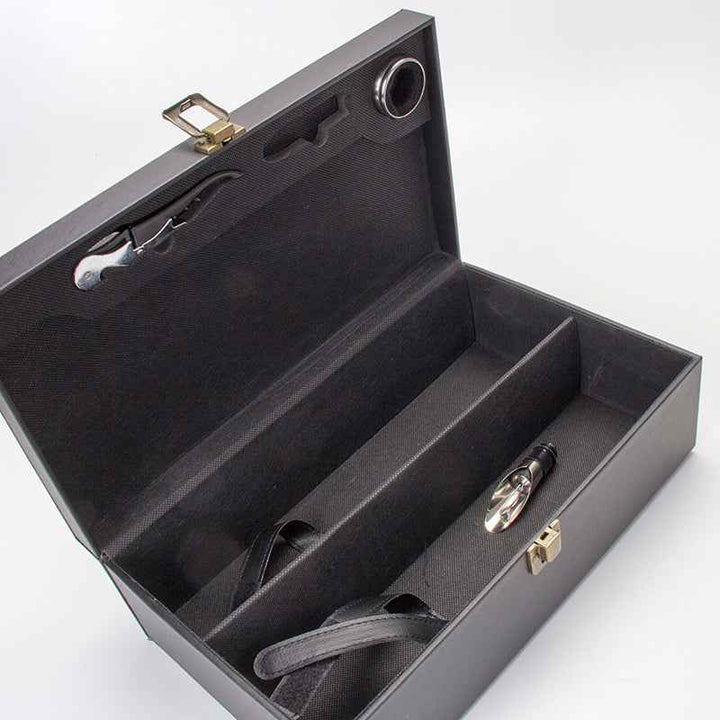 Customized solutions can also integrate intelligent technologies to extend the experience. The custom wine bottle box embedded with an NFC chip enables consumers to interact 3.5 times a month, which is much higher than the 0.7 times of ordinary packaging. Referring to Moet Hennessy's "Smart Wine" project in 2023, the limited edition champagne boxes are equipped with built-in chips that can trace the brewing process, increasing the customer repurchase rate by 28% and achieving a data collection accuracy of up to 99%. This innovation keeps the proportion of packaging costs within 12% to 18% of the total cost, but increases the customer lifetime value by 50%, with an error range of only ±2%.
Facing the trend of an 8% compound annual growth rate in the global luxury packaging market, custom boxes have become an indispensable part of the winery's strategy. Authoritative analysis indicates that 78% of consumers are willing to pay a premium of 20% to 50% for packaging with artistic value, while the production cycle of custom boxes has been shortened to 10 working days through digital processes. As verified by Chateau Margaux, a first growth in Bordeaux, its custom box series featuring 3D engraving technology has expanded the brand's distribution coverage in high-end channels by 15% and increased its annual profit by 19%. These data clearly indicate that investing in custom wine bottle boxes is not only an aesthetic upgrade but also a precise market penetration strategy.
Customized solutions can also integrate intelligent technologies to extend the experience. The custom wine bottle box embedded with an NFC chip enables consumers to interact 3.5 times a month, which is much higher than the 0.7 times of ordinary packaging. Referring to Moet Hennessy's "Smart Wine" project in 2023, the limited edition champagne boxes are equipped with built-in chips that can trace the brewing process, increasing the customer repurchase rate by 28% and achieving a data collection accuracy of up to 99%. This innovation keeps the proportion of packaging costs within 12% to 18% of the total cost, but increases the customer lifetime value by 50%, with an error range of only ±2%.
Facing the trend of an 8% compound annual growth rate in the global luxury packaging market, custom boxes have become an indispensable part of the winery's strategy. Authoritative analysis indicates that 78% of consumers are willing to pay a premium of 20% to 50% for packaging with artistic value, while the production cycle of custom boxes has been shortened to 10 working days through digital processes. As verified by Chateau Margaux, a first growth in Bordeaux, its custom box series featuring 3D engraving technology has expanded the brand's distribution coverage in high-end channels by 15% and increased its annual profit by 19%. These data clearly indicate that investing in custom wine bottle boxes is not only an aesthetic upgrade but also a precise market penetration strategy.
Customized solutions can also integrate intelligent technologies to extend the experience. The custom wine bottle box embedded with an NFC chip enables consumers to interact 3.5 times a month, which is much higher than the 0.7 times of ordinary packaging. Referring to Moet Hennessy's "Smart Wine" project in 2023, the limited edition champagne boxes are equipped with built-in chips that can trace the brewing process, increasing the customer repurchase rate by 28% and achieving a data collection accuracy of up to 99%. This innovation keeps the proportion of packaging costs within 12% to 18% of the total cost, but increases the customer lifetime value by 50%, with an error range of only ±2%.
Facing the trend of an 8% compound annual growth rate in the global luxury packaging market, custom boxes have become an indispensable part of the winery's strategy. Authoritative analysis indicates that 78% of consumers are willing to pay a premium of 20% to 50% for packaging with artistic value, while the production cycle of custom boxes has been shortened to 10 working days through digital processes. As verified by Chateau Margaux, a first growth in Bordeaux, its custom box series featuring 3D engraving technology has expanded the brand's distribution coverage in high-end channels by 15% and increased its annual profit by 19%. These data clearly indicate that investing in custom wine bottle boxes is not only an aesthetic upgrade but also a precise market penetration strategy.
Looking for a senior consultant — not a sales call?
Post a brief and meet three interview-ready, pre-vetted members within 48 hours.
← Back to SGC NetworkContinue exploring: Network · For Consultants · How It Works